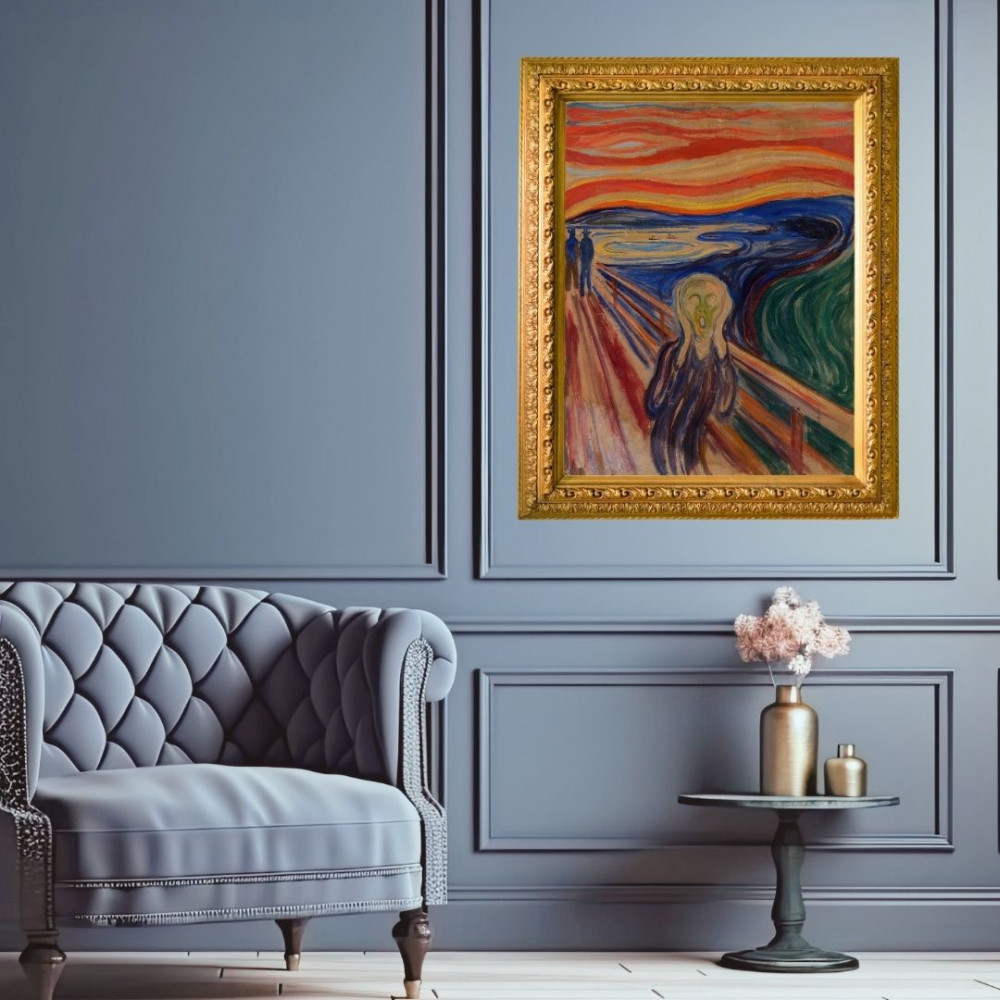
- A wall painting printed from the world's most ancient classical fine art
- It gives the place elegance and elegance, reflected in the precision of colours, art and beauty
- It matches the colors of classic and modern furniture and decor.
- Suitable for home or office walls
- High-quality printing that shows the colors and details of the painting in a way that illustrates the magic of old paintings
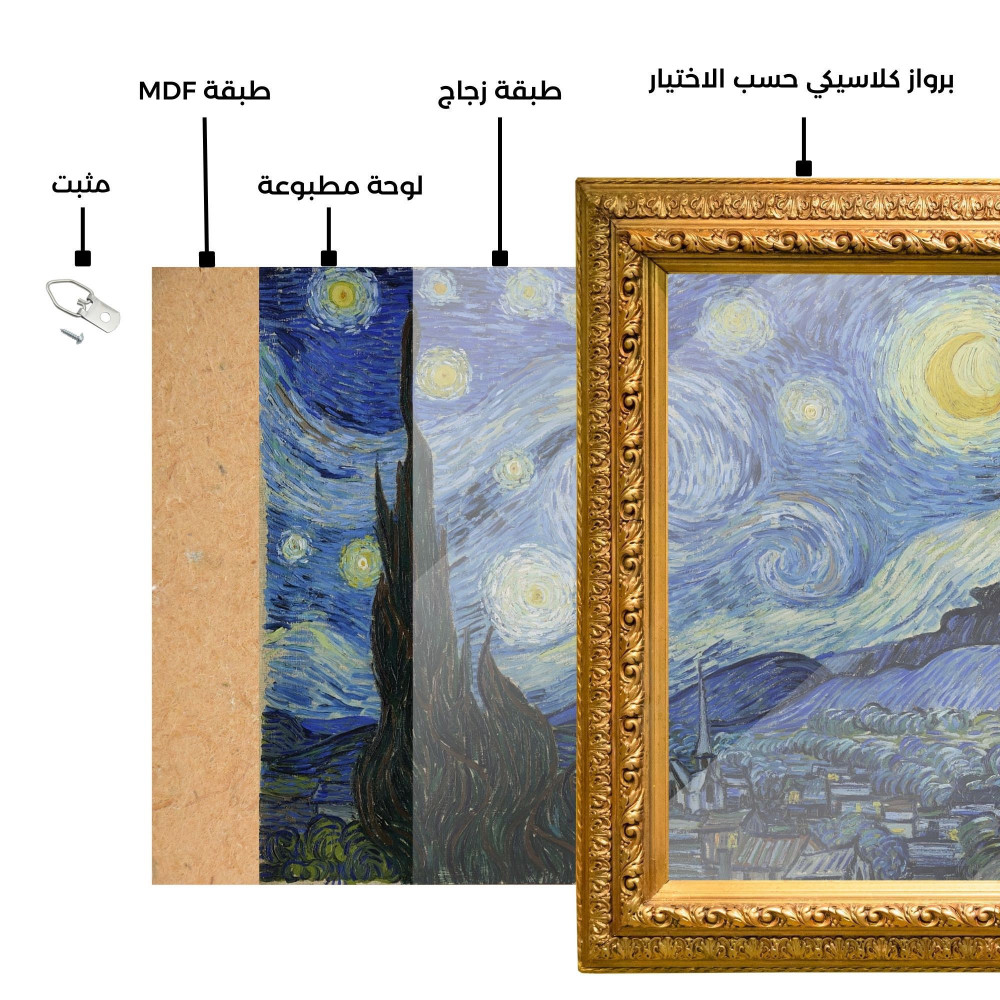
- Coated with glass
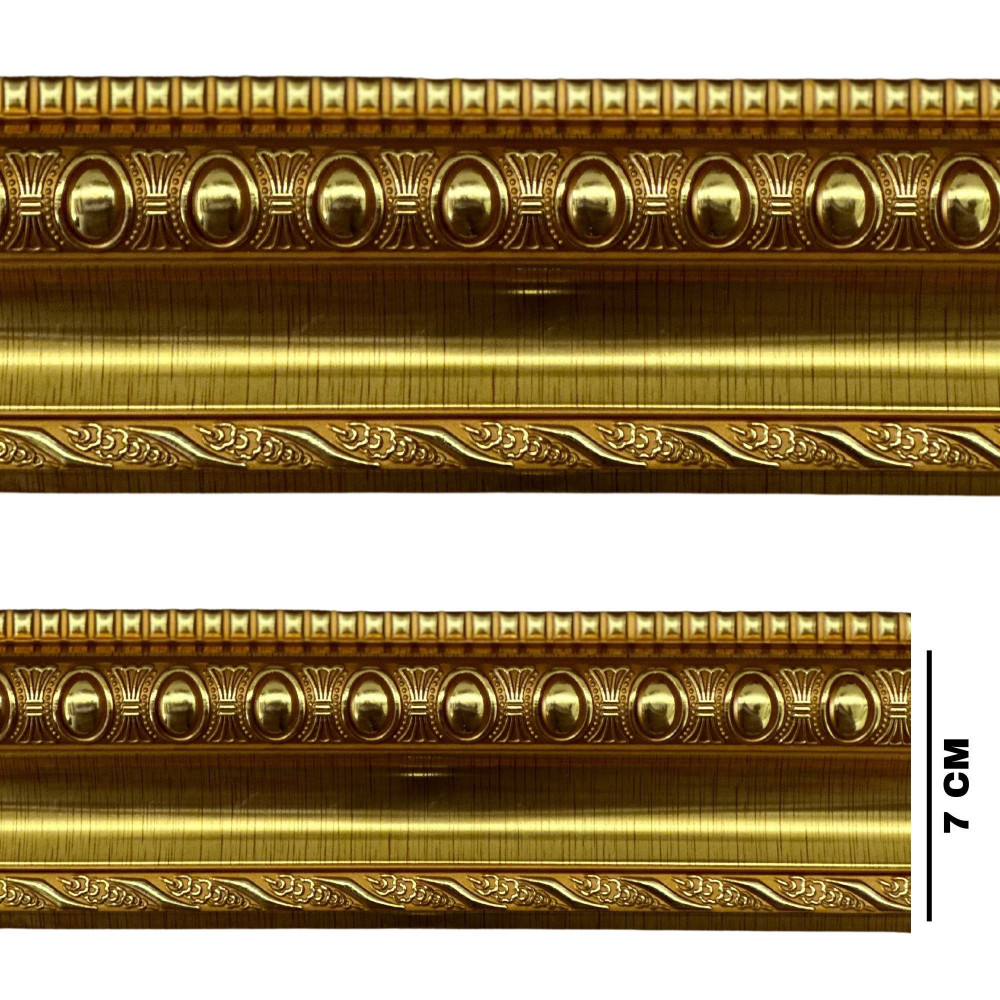
- The classic frame was used to reflect the elegance of the painting and evoke a charming, classic feel
- Available in several options and sizes
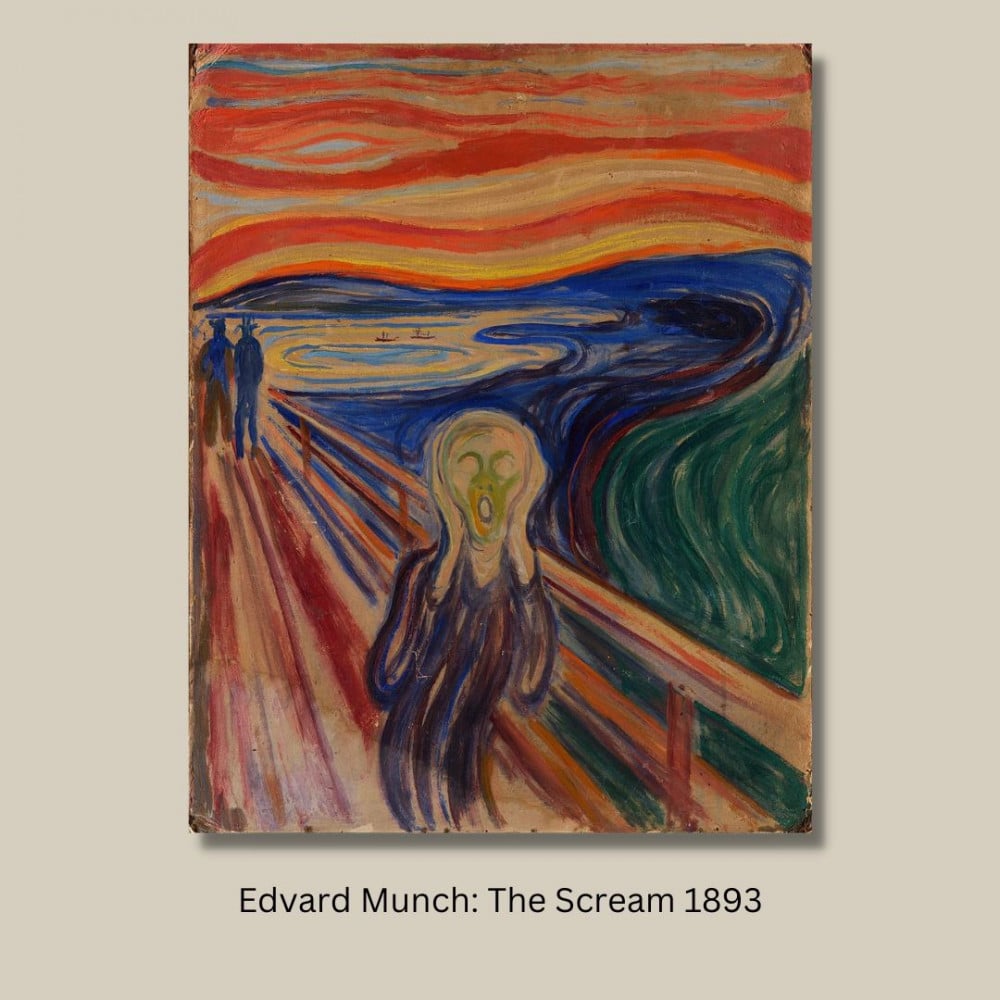
A painting called The Scream , a painting painted by Edvard Munch in 1893
We present to you an overview of the artist of the painting:
Edvard Mensch 1863 - 1944
He was a Norwegian painter. His most famous work, The Scream (1893), is one of the most iconic paintings of Western art.
His childhood was overshadowed by illness and the fear of inheriting a mental condition that ran in the family. While studying at the Royal School of Art and Design in Kristiania (today's Oslo), Munch began living a bohemian life under the influence of the nihilist Hans Jaeger, who urged him to paint his own emotional and psychological state (soul painting); From here emerged his distinctive style.
The impact of travel on it and the opening of new outlets. Whereas, he learned a lot in Paris from Paul Gauguin, Vincent Van Gogh and Henri de Toulouse-Lautrec, especially the use of colour. In Berlin, he met the Swedish playwright August Strindberg, whom he painted, when he embarked on a large series of paintings that he later called The Frieze of Life, depicting a series of profound themes such as love, anxiety, jealousy and betrayal.
The Scream was born while he was walking outside at sunset, when he "heard the immense, infinite cry of nature." The painting's pained face is widely recognized as a reflection of the anxiety of the contemporary person. He made two versions in paint and two versions in pastel colors, in addition to a number of prints. One of the pastels eventually fetched the fourth highest price paid for a painting at auction.
As his fame and fortune grew, his emotional state remained insecure. He briefly considered marriage, but could not bring himself to commit. Mensch was pleased by the growing acceptance by the people of Christiania and his prominence in the city's museums.
He spent his last years working in peace and privacy. Although his works were banned in Nazi-occupied Europe, most of them survived World War II, providing him with a legacy.